
Subtotal ₹0.00 Subtotal: ₹0.00



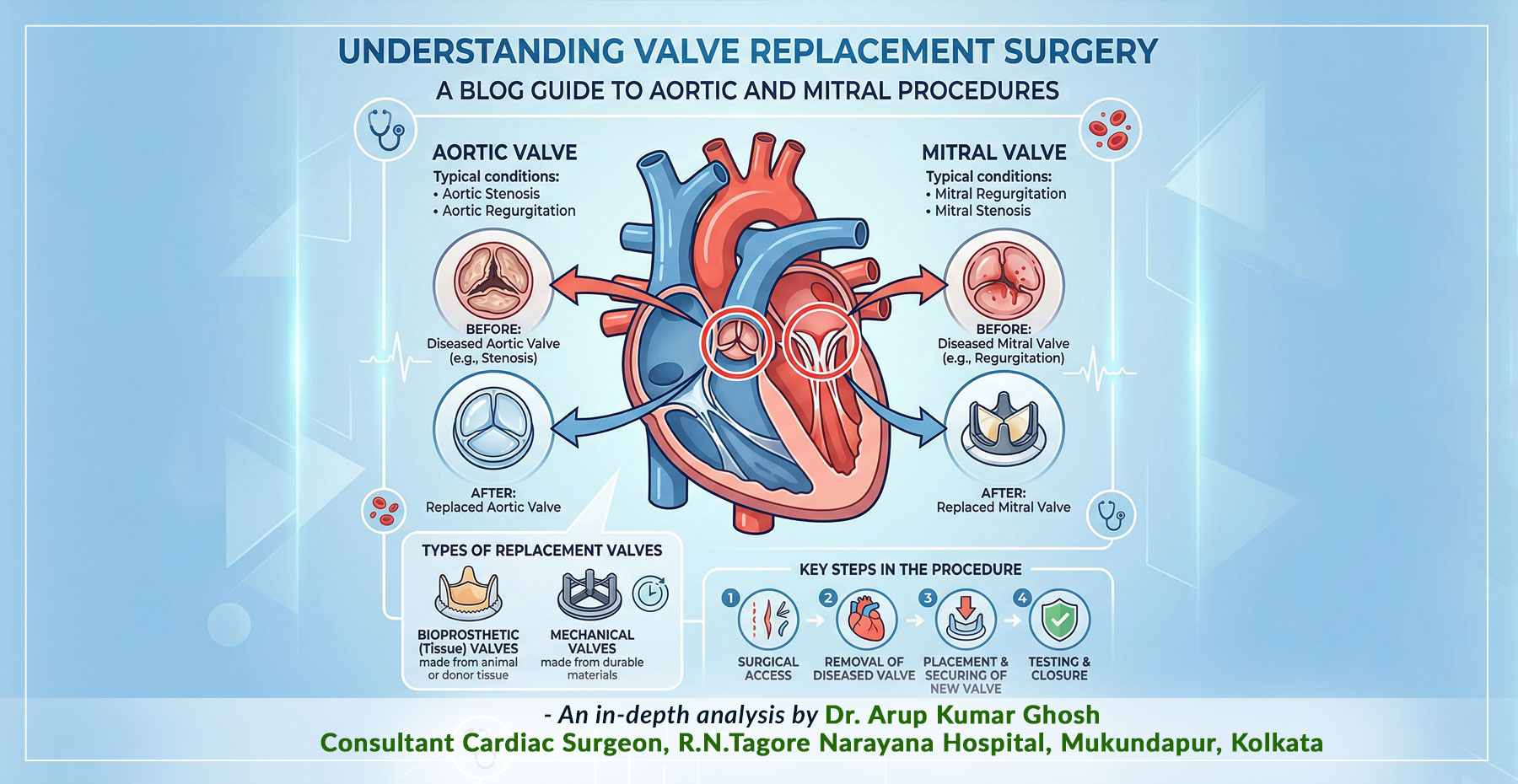
Table of Contents
Toggle“Patient Guide to Valve Replacement Surgery in Kolkata” – An essential guide from Dr. Arup Kumar Ghosh, Renowned Cardiac Surgeon in Narayana Hospital, Kolkata
Introduction
Heart valve problems can be confusing and stressful, especially when surgery is suggested. As a cardiac surgeon, I often meet patients and families who have many questions about the treatment, recovery, and long-term results. This blog is designed to help you clearly understand every aspect of Valve Replacement Surgery in Kolkata in a simple and reassuring way.
Kolkata is now home to advanced cardiac care, offering modern techniques and experienced specialists. If you are searching for the best Valve replacement in Kolkata or looking for the best doctor for Valve replacement in Kolkata, it is important to have the right information before making any decision.
In this guide, I will explain the basics of heart valve disease, when surgery is needed, and the different types of procedures available, including Aortic Valve replacement in Kolkata and Mitral Valve Replacement in Kolkata. My goal is to help you feel informed, confident, and prepared for your treatment journey.
This guide will help you and your family make the best choice for your heart health, from diagnosis to recovery.
Understanding Heart Valve Problems
Your heart has four valves that control blood flow. When any of these valves become damaged, they may do either of the following:
- Narrow (stenosis) – restricting blood flow
- Leak (regurgitation) – allowing blood to flow backward
When the damage becomes severe, medicines alone are not enough. In such cases, Valve Replacement Surgery in Kolkata becomes the most effective treatment to restore normal heart function.
According to cardiac care experts, valve replacement involves removing the damaged valve and replacing it with an artificial (mechanical or tissue) valve to improve blood circulation and overall heart performance.
Why Valve Replacement Surgery is Needed
You may need surgery if you experience:
- Breathlessness even at rest
- Chest pain or discomfort
- Fatigue and reduced stamina
- Swelling in legs or abdomen
- Frequent dizziness or fainting
Common conditions that require surgery include:
- Aortic stenosis
- Mitral valve regurgitation
- Rheumatic heart disease
Modern cardiac centers in Kolkata use advanced diagnostic tools and techniques to decide the right timing and type of surgery.
Types of Valve Replacement Surgery
Aortic Valve Replacement in Kolkata
The aortic valve controls blood flow from the heart to the body. When it becomes stiff or narrow, surgery is needed.
Aortic valve replacement in Kolkata is one of the most commonly performed procedures and can be done through
- Open-heart surgery
- Minimally invasive surgery
- Transcatheter techniques (in selected patients)
As a cardiac surgeon in Kolkata, I focus on advanced techniques that help patients recover faster and return to normal life.
Mitral Valve Replacement in Kolkata
The mitral valve regulates blood flow between the left chambers of the heart.
Mitral Valve Replacement in Kolkata is required when:
- The valve leaks severely
- The valve becomes thick and does not open properly
This procedure improves symptoms like breathlessness and fatigue significantly.
Mechanical vs Tissue Valves
Patients often ask which valve is better. The answer depends on age and lifestyle.
Mechanical Valve:
- Long-lasting (lifetime durability)
- Requires lifelong blood-thinning medicines
Tissue (Biological) Valve:
- No long-term blood thinners in most cases
- May need replacement after 10–15 years
Your doctor will guide you in choosing the best option based on your condition.
Procedure: What Happens During Surgery
Valve replacement is usually performed under general anesthesia.
Steps include:
- The chest is opened (or small incision in minimally invasive cases)
- The heart is temporarily stopped using a heart-lung machine
- The damaged valve is removed
- A new valve is implanted
- The heart is restarted
The surgery typically takes around 2 to 4 hours, depending on complexity.
Recovery After Valve Replacement Surgery
Recovery
Recovery after valve replacement surgery is a gradual but positive journey. From my experience, most patients start feeling better within a few weeks, especially when they follow the right care plan.
After surgery, the patient will usually stay in the ICU for 1–2 days for close monitoring, followed by a few more days in the hospital. During this time, our team ensures that your heart is functioning well and your body is healing properly.
Once returned home, rest is important, but so is gentle movement. I always advise my patients to start with short walks and slowly increase their activity level. They may feel tired in the beginning, but this improves day by day.
It is also very important to:
- Take all medicines on time
- Keep your wound clean and dry
- Follow a healthy, low-fat diet
- Attend regular follow-up visits
Most patients recover well within 4 to 8 weeks and can return to their normal routine with better energy and improved breathing.
Remember, every patient heals at a different pace. Stay patient, follow your doctor’s advice, have regular follow-ups and do not hesitate to ask questions during your recovery period. With proper care, most patients return to a normal and active life.
Risks and Safety
Like any major surgery, valve replacement has some risks, but modern techniques have made it very safe.
Possible risks include:
- Infection
- Bleeding
- Irregular heartbeat
- Stroke (rare)
However, in experienced hands, success rates are very high.
Best Valve Replacement in Kolkata: Choosing the Right Care
When searching for the Best Valve replacement in Kolkata, focus on:
- Experience of the cardiac surgeon
- Hospital infrastructure and ICU support
- Availability of advanced surgical techniques
- Post-operative care and rehabilitation
Kolkata has several reputed hospitals offering world-class cardiac care with advanced technology and expert teams.
The Best Doctor for Valve Replacement in Kolkata
Choosing the right surgeon is one of the most important decisions.
Some highly experienced cardiac surgeons in Kolkata have decades of experience in complex cardiac procedures, including valve surgeries.
From my own practice, I have dedicated years to advanced valve surgeries, especially Aortic or Mitral Valve replacement in Kolkata, using modern techniques to improve patient outcomes.
Cost of Valve Replacement Surgery in Kolkata
From my experience, one of the most common concerns patients have is about the cost of treatment. The Valve Replacement Surgery in Kolkata cost can vary depending on several important factors, so it is always best to understand what influences the overall expense.
The cost depends on:
- Type of valve (mechanical or tissue)
- Hospital facilities
- Surgical approach (open vs minimally invasive)
- Patient condition
Patients often ask me how to find the best Valve replacement in Kolkata within their budget. I always advise not to choose based only on cost. The experience of the surgeon and quality of care are equally important when selecting the best doctor for Valve replacement in Kolkata.
Many hospitals also offer insurance support, government health schemes, and EMI options to make treatment more affordable. The average cost of aortic or mitral valve replacement surgery in Kolkata ranges between ₹4,00,000 to ₹6,00,000. In general, the cost can vary widely, and it is best discussed after proper evaluation.
During consultation, we always discuss a clear estimate so that patients and their families can plan comfortably. The goal is not just successful surgery, but safe treatment and long-term heart health.
Life After Valve Replacement
After surgery, patients can live a healthy and active life.
Lifestyle Tips:
- Take medicines regularly
- Maintain a heart-healthy diet
- Exercise as advised
- Avoid smoking and alcohol
- Attend regular check-ups
Most patients experience:
- Improved breathing
- Better energy levels
- Enhanced quality of life
Advances in Valve Surgery:
Modern cardiac surgery has improved significantly.
New techniques include:
- Minimally invasive surgery
- Transcatheter valve replacement (TAVR/TMVR)
- Valve repair techniques that avoid replacement
These approaches reduce pain, shorten hospital stays, and speed up recovery.
Conclusion
Valve problems can feel frightening at first, but with the right care and timely treatment, they are highly manageable. As I often tell my patients, choosing Valve Replacement Surgery in Kolkata is not just about treating a disease, it is about giving yourself a better and healthier life.
Today, with advanced technology and skilled medical teams, getting the Best Valve replacement in Kolkata is very much possible. The key is to seek timely advice, understand your condition, and choose the right treatment plan. Finding the best doctor for Valve replacement in Kolkata plays an important role in ensuring a safe surgery and smooth recovery.
Whether you require an aortic or mitral procedure, modern options like Aortic Valve replacement in Kolkata and Mitral Valve Replacement in Kolkata have shown excellent results, helping patients return to their normal daily activities with improved quality of life.
Do not ignore symptoms or delay treatment. Early diagnosis and expert care can make a significant difference. Stay positive, follow your doctor’s advice, and take one step at a time toward recovery.
Your heart is precious. With the right guidance and care, you can look forward to a healthy future.
FAQ's on Valve Replacement Surgery in Kolkata
What is valve replacement surgery for children in Kolkata?
Valve replacement surgery is a specialized cardiac procedure where a damaged or malformed heart valve is replaced with a mechanical or bioprosthetic valve. In Kolkata and Howrah, pediatric cardiac surgeons perform this to treat congenital heart defects or rheumatic heart disease in children.
How do I know if my child needs valve replacement surgery?
Common signs include fast breathing, poor feeding, excessive sweating during activity, and slow weight gain. Insights from child heart experts in Howrah suggest that an Echocardiogram is the primary tool used to diagnose severe valve stenosis or regurgitation that may require surgical intervention.
What is the cost of heart valve replacement surgery in Kolkata?
The cost of valve replacement surgery in Kolkata typically ranges from ₹1,30,000 to ₹3,50,000, depending on the hospital, the type of valve used (mechanical vs. tissue), and the complexity of the child's condition.
Which are the best hospitals for pediatric valve replacement in Kolkata and Howrah?
Top-tier facilities include the NH Rabindranath Tagore International Institute of Cardiac Sciences (RTIICS), BM Birla Heart Research Centre, and Narayana Multispeciality Hospital in Howrah, which offers advanced pediatric cardiac care units.
What are the different types of valves used for children?
Surgeons generally use two types: Mechanical valves, which are highly durable but require life-long blood thinners, and Bioprosthetic (tissue) valves, which do not require blood thinners but may need replacement as the child grows.
Is valve replacement surgery safe for infants and toddlers?
While any heart surgery carries risks, the success rate for pediatric valve surgery in Kolkata is high due to modern technology and specialized pediatric anesthesia teams. Early diagnosis and timely intervention by a child heart expert significantly improve outcomes.
What is the recovery time after heart surgery for a child?
Most children stay in the hospital for 7 to 10 days. Full recovery usually takes 4 to 6 weeks, during which regular follow-up with a pediatric cardiologist in Howrah or Kolkata is essential to monitor heart function.
Can a child live a normal life after valve replacement?
Yes. Most children return to school and lead active lives. However, they may require regular check-ups and specific precautions regarding strenuous competitive sports or certain medications depending on the type of valve.
What are the risks of delaying valve surgery in children?
Delaying surgery can lead to irreversible heart muscle damage, pulmonary hypertension, and heart failure. Insights from Howrah experts emphasize that "the earlier the repair, the better the long-term prognosis for the child's growth."
Where to find doctor for Valve Replacement Surgery in Kolkata & Howrah?
For expert consultation and the best preference for valve replacement surgery, you can contact +91 9051276688 to connect with leading child heart specialists in the Kolkata and Howrah region.
Disclaimer: This article is for informational purposes only and does not constitute medical advice. Always consult with a qualified cardiac specialist for diagnosis and treatment related to your personal health condition.
Follow Dr. Arup Kumar Ghosh on Facebook & Youtube for regular updates.
Read Also:
- Why Coronary Surgery in Kolkata Is Considered One of the Most Advanced in India
- Mitral Valve Disease: Causes, Symptoms & Treatment Options
- Advanced Aortic Surgery Options Now Available in Kolkata
- Why Patients Prefer Kolkata for Complex Aortic Valve Surgeries
- A Cardiac Surgeon’s Guide to Common Heart Diseases and Treatment for Adults in Bangladesh
- Available Modern Heart Surgery Treatment in Agartala, Tripura in 2026
- How Advanced Cardiac Surgery is Transforming Healthcare in Bihar 2026
- When Should You Consult a Cardiothoracic Surgeon in Kolkata
- Top Adult Cardiac Surgeons in Kolkata for Advanced Heart Care in 2025
- How to Find the Right Cardiac Surgeons in Kolkata – A Complete Patient’s Guide
- Top Surgeons for Valve Replacement in Kolkata You Can Trust
- Best Aortic Surgeons in Kolkata in 2025 for Complex Heart Procedures
- Aortic Valve Replacement in Small Annulus in 2025: Advanced Solutions in Kolkata
- Renowned Cardiac Surgeons in Bangladesh in 2025-You Should Know About
- Renowned Cardiac Surgeons in Tripura: Your Guide to Heart Care
- Renowned Cardiac Surgeons in Bihar: Who are saving lives every day
- Cardiac Surgeon Vs. Cardiologist: A Simple Guide for Everyone

Comments are closed