
Subtotal ₹0.00 Subtotal: ₹0.00



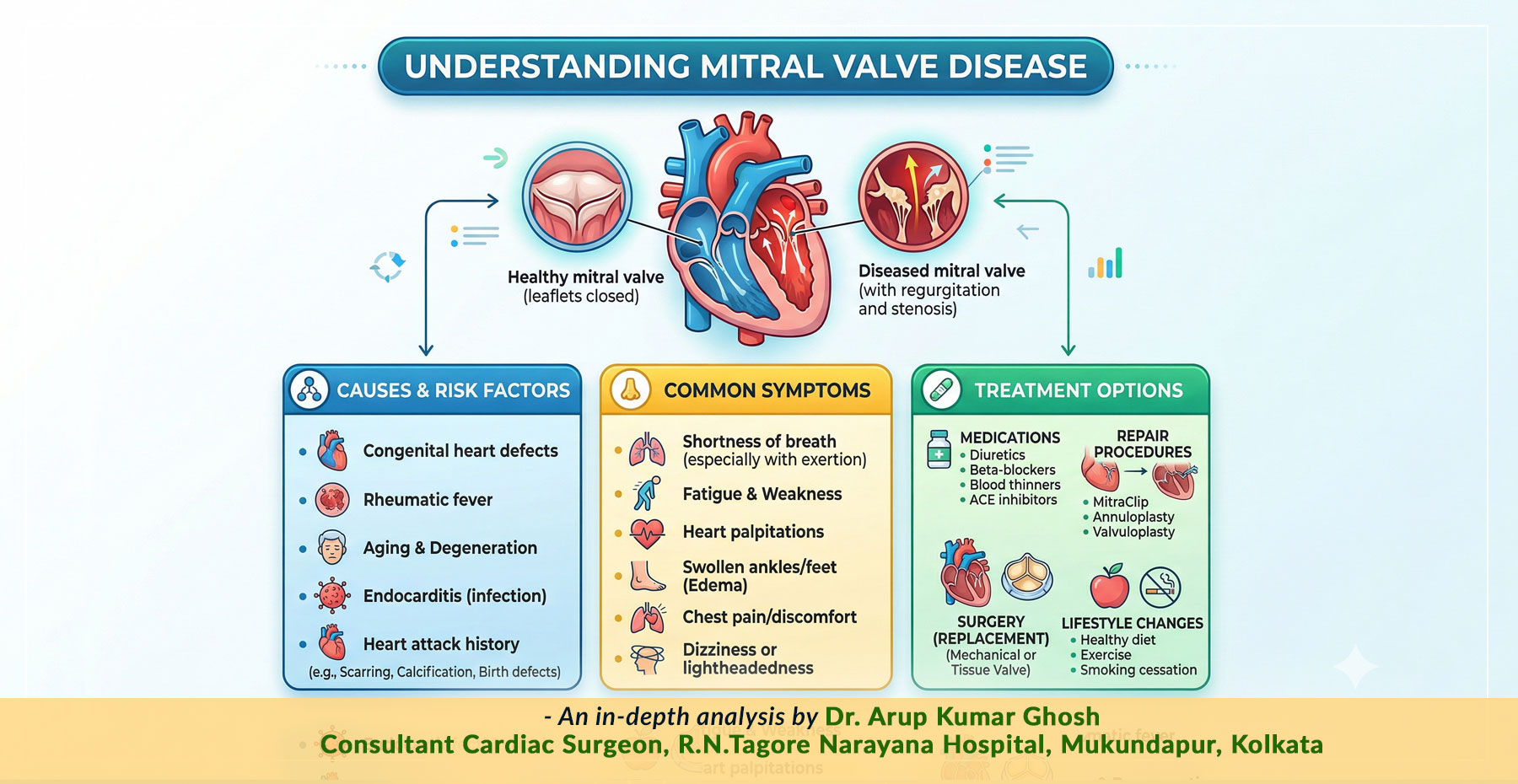
Table of Contents
ToggleAn essential guide to “Mitral Valve Disease: Causes, Symptoms & Treatment Options” from Dr. Arup Kumar Ghosh, Renowned Cardiac Surgeon in Narayana Hospital, Kolkata
Introduction
Mitral Valve Disease is one of the most common heart valve problems that can affect people of all ages. It happens when the mitral valve does not work properly, disturbing the normal flow of blood inside the heart. Many patients do not notice symptoms in the early stage, which makes awareness very important. Understanding Mitral Valve Disease causes, symptoms and treatment options can help in early diagnosis and timely care.
Today, with the growth of advanced healthcare, patients have access to high-quality Mitral Valve Surgery services that can effectively manage this condition. Treatments such as Mitral Valve Repair in Kolkata and Mitral Valve Replacement in Kolkata are now performed using modern techniques, offering better outcomes and faster recovery. Consulting an experienced Cardiac surgeon in Kolkata at the right time can make a significant difference in choosing the best treatment and improving overall heart health.
What is Mitral Valve Disease?
The mitral valve is located between the left atrium and left ventricle of the heart. Its main role is to ensure that blood flows in one direction. When this valve does not function properly, it leads to mitral valve disease.
There are mainly two types:
Mitral Valve Regurgitation
when the valve does not close properly and blood leaks backward
Mitral Valve Stenosis
when the valve becomes narrow and restricts blood flow
Both conditions affect the heart’s ability to pump blood efficiently.
Mitral Valve Disease Causes
Understanding the causes helps in early diagnosis and better treatment planning. Mitral Valve Disease can be congenital (present at birth) or acquired (develops later in life).
Rheumatic Fever
One of the most common causes is rheumatic fever, which can damage the mitral valve. It develops as a complication of untreated throat infections and can damage the valve over time.
Age-related Degeneration
With age, calcium deposits can build up on the valve, causing stiffness and narrowing.
Mitral Valve Prolapse
Some people develop the condition because of mitral valve prolapse, where the valve does not close tightly and allows blood to leak backward. Heart-related problems such as a previous heart attack or an enlarged heart can also affect the valve’s function.
Heart Conditions
- Cardiomyopathy
- Previous heart attack
- Enlarged heart
These conditions can weaken the valve structure.
Infections (Endocarditis)
Bacterial infections can damage the heart valve and lead to serious complications.
Autoimmune Diseases
Conditions like lupus can also affect the mitral valve.
Congenital Heart Defects
Some people are born with abnormal valve structure.
Symptoms of Mitral Valve Disease
The symptoms of Mitral Valve Disease often develop slowly, and in some cases, people may not notice anything in the early stage. As the condition progresses, the heart struggles to pump blood properly, leading to visible signs. As the condition progresses, common symptoms include:
One of the most common symptoms is shortness of breath, especially during physical activity or while lying down. Many people also feel tired easily, even after doing simple daily work. This happens because the body is not getting enough oxygen-rich blood.
Some patients experience a fast or irregular heartbeat, often described as a fluttering feeling in the chest. Mild chest discomfort or pressure may also occur in certain cases. Swelling in the legs, ankles, or feet is another sign, caused by fluid buildup in the body.
In more advanced stages, dizziness or light-headedness can be seen. If you notice any of these symptoms, it is important to seek medical advice early to avoid complications.
Shortness of Breath
One of the most common symptoms is shortness of breath, especially during physical activity or while lying down.
Fatigue
Many people also feel tired easily, even after doing simple daily work. This happens because the body is not getting enough oxygen-rich blood.
Irregular Heartbeat (Palpitations)
Some patients experience a fast or irregular heartbeat, often described as a fluttering feeling in the chest.
Chest Discomfort
Mild to moderate chest discomfort or pressure may also occur in certain cases.
Swelling
Swelling in the legs, ankles, or feet is another sign, caused by fluid buildup in the body.
Dizziness or Lightheadedness
In more advanced stages, dizziness or lightheadedness can be seen. If these symptoms appear, it is important to consult a Cardiac surgeon in Kolkata or a cardiologist for proper evaluation.
Complications if Left Untreated
Ignoring mitral valve disease can lead to serious health risks such as:
- Heart failure
- Atrial fibrillation (irregular heartbeat)
- Pulmonary hypertension
- Blood clots
Early treatment can prevent these complications and improve quality of life.
Diagnosis of Mitral Valve Disease
Doctors use several tests to confirm the condition:
- Echocardiogram (Echo) – main test to assess valve function
- ECG (Electrocardiogram) – checks heart rhythm
- Chest X-ray – shows heart enlargement
- Cardiac MRI or CT scan – detailed imaging
A timely diagnosis is key to choosing the right Mitral Valve Surgery services.
Treatment Options for Mitral Valve Disease
Treatment depends on the severity of the condition, symptoms, and overall health.
Lifestyle Changes
- Healthy diet
- Regular exercise (as advised by doctor)
- Avoid smoking and alcohol
Medications
Medicines cannot cure the disease but help control symptoms:
- Blood thinners
- Diuretics
- Beta-blockers
These reduce strain on the heart and improve symptoms.
Advanced Mitral Valve Surgery Services
When the condition becomes severe, surgery is often required. Modern hospitals now offer advanced and minimally invasive Mitral Valve Surgery services.
Mitral Valve Repair in Kolkata
This is usually the preferred option when possible.
Benefits:
- Preserves the natural valve
- Lower risk of complications
- Faster recovery
Techniques include:
- Valve reshaping
- Annuloplasty (tightening the valve ring)
Many experienced specialists offering Mitral Valve Repair in Kolkata use minimally invasive methods, reducing hospital stay and recovery time.
Mitral Valve Replacement in Kolkata
If the valve is too damaged, replacement becomes necessary.
There are two types of replacement valves:
- Mechanical valves – long-lasting but require lifelong medication
- Biological valves – natural tissue valves with fewer medication needs
Advanced centers providing Mitral Valve Replacement in Kolkata now use modern surgical techniques with high success rates.
Minimally Invasive & Catheter-Based Procedures
In some patients, especially high-risk cases, doctors may recommend:
- Minimally invasive heart surgery
- Transcatheter Mitral Valve Repair (TMVR)
These procedures involve smaller incisions and faster recovery.
Choosing the Right Cardiac Surgeon in Kolkata
Selecting the right specialist is very important for successful treatment.
Look for:
- Experience in valve surgeries
- Availability of advanced surgical techniques
- Hospital infrastructure and ICU support
- Patient reviews and success rates
An experienced Cardiac surgeon in Kolkata can guide you on whether repair or replacement is the best option.
Recovery After Mitral Valve Surgery
Recovery depends on the type of surgery and patient condition. Recovery after mitral valve surgery takes time, but most patients gradually return to a normal and active life. The first few days are usually spent in the hospital, where doctors closely monitor heart function and overall health. Depending on the type of procedure, such as repair or replacement, the hospital stay may last about 5 to 7 days.
Once at home, patients are advised to take proper rest and avoid heavy physical activity for a few weeks. It is normal to feel tired in the beginning, but energy levels slowly improve with time. Walking for short durations, eating a healthy diet, and taking medicines as prescribed are important parts of recovery.
Regular follow-up visits help the doctor track healing and ensure everything is on the right path. In some cases, cardiac rehabilitation programs are recommended to improve strength and confidence. With proper care and lifestyle changes, most people recover well and enjoy a better quality of life after surgery.
Tips for Faster Recovery:
- Follow doctor’s advice strictly
- Take medicines regularly
- Maintain a heart-healthy lifestyle
Prevention Tips
While not all cases can be prevented, you can reduce risk by:
- Treating throat infections early
- Maintaining good oral hygiene
- Managing blood pressure and diabetes
- Regular health check-ups
Conclusion
Mitral Valve Disease is a serious but treatable heart condition. Understanding the Mitral Valve Disease causes, symptoms and treatment options helps in early diagnosis and better outcomes.
With advanced medical care, patients now have access to high-quality Mitral Valve Surgery services, including Mitral Valve Repair in Kolkata and Mitral Valve Replacement in Kolkata. Consulting an experienced Cardiac surgeon in Kolkata at the right time can make a big difference in recovery and long-term heart health.Early treatment can save lives and help you live a healthy, active future.
FAQ's on Mitral Valve Disease: Causes, Symptoms & Treatment Options in Kolkata
What is advanced aortic surgery for children and how is it performed in Kolkata?
Advanced aortic surgery in children involves complex procedures like the Ross procedure or aortic root replacement to treat congenital defects. In Kolkata, top pediatric cardiac surgeons use state-of-the-art technology to ensure precision and safety for young patients.
Who is a leading child heart expert in Howrah for advanced aortic conditions?
Experts like Dr. Debasis Das at Narayana Superspeciality Hospital, Howrah, are renowned for their insights into pediatric aortic surgery, bringing years of international experience to complex congenital heart cases.
What are the common signs that a child needs aortic surgery?
Common signs include excessive fatigue, shortness of breath during play, chest pain, and poor weight gain. A child heart expert in Howrah will typically use an echocardiogram to confirm the severity of the aortic condition.
What are the success rates for pediatric aortic surgery in Kolkata?
Thanks to advanced infrastructure in Kolkata’s leading cardiac centers, success rates for pediatric aortic surgeries are now exceptionally high, matching global standards for both safety and long-term outcomes.
Can aortic valve repair be done minimally invasively in children?
Yes, in specific cases, child heart experts in Kolkata and Howrah utilize minimally invasive techniques to reduce scarring and speed up the recovery process for children undergoing valve or aortic repairs.
How long is the recovery period after advanced aortic surgery for a child?
Most children stay in the hospital for 7 to 10 days post-surgery. Full recovery and a return to normal school activities usually take about 4 to 6 weeks, depending on the child's overall health and the complexity of the procedure.
What diagnostic tests are mandatory before aortic surgery in Howrah?
Mandatory tests include a 2D Echo, Pediatric ECG, and sometimes a Cardiac CT or MRI to provide the surgeon with a detailed anatomical map of the child's heart and aorta.
Is there a risk of the aortic condition returning after surgery?
While surgery provides a definitive solution for most, growing children require regular follow-ups with a pediatric cardiologist in Kolkata to monitor the heart's growth and ensure the surgical site remains healthy.
What is the cost of advanced aortic surgery in Kolkata and Howrah?
The cost varies based on the complexity of the case and the chosen hospital. However, Kolkata remains a cost-effective hub for high-quality cardiac care compared to other major Indian metros.
Why should I choose a "Child Heart Expert" over a general cardiac surgeon?
Children’s hearts are physically different and their bodies are still growing. A child heart expert in Howrah specializes in the delicate nuances of congenital heart anatomy, which is crucial for long-term surgical success.
Where to find doctor for Mitral Valve Disease Treatment in Kolkata & Howrah?
For the best preference and specialized care regarding Mitral Valve Disease, you can contact +91 9051276688.
Disclaimer: This article is for informational purposes only and does not constitute medical advice. Always consult with a qualified cardiac specialist for diagnosis and treatment related to your personal health condition.
Follow Dr. Arup Kumar Ghosh on Facebook & Youtube for regular updates.
Read Also:
- Life After Heart Surgery: The Ultimate Guide
- How to Choose the Right Cardiothoracic Surgeon in Kolkata: The 2026 Ultimate Guide
- Best Coronary Surgeon in Kolkata: Who Should You Trust with Your Heart?
- Why Coronary Surgery in Kolkata Is Considered One of the Most Advanced in India
- Patient Guide to Valve Replacement Surgery in Kolkata
- Advanced Aortic Surgery Options Now Available in Kolkata
- Why Patients Prefer Kolkata for Complex Aortic Valve Surgeries
- A Cardiac Surgeon’s Guide to Common Heart Diseases and Treatment for Adults in Bangladesh
- Available Modern Heart Surgery Treatment in Agartala, Tripura in 2026
- How Advanced Cardiac Surgery is Transforming Healthcare in Bihar 2026
- When Should You Consult a Cardiothoracic Surgeon in Kolkata
- Top Adult Cardiac Surgeons in Kolkata for Advanced Heart Care in 2025
- How to Find the Right Cardiac Surgeons in Kolkata – A Complete Patient’s Guide
- Top Surgeons for Valve Replacement in Kolkata You Can Trust

Comments are closed